
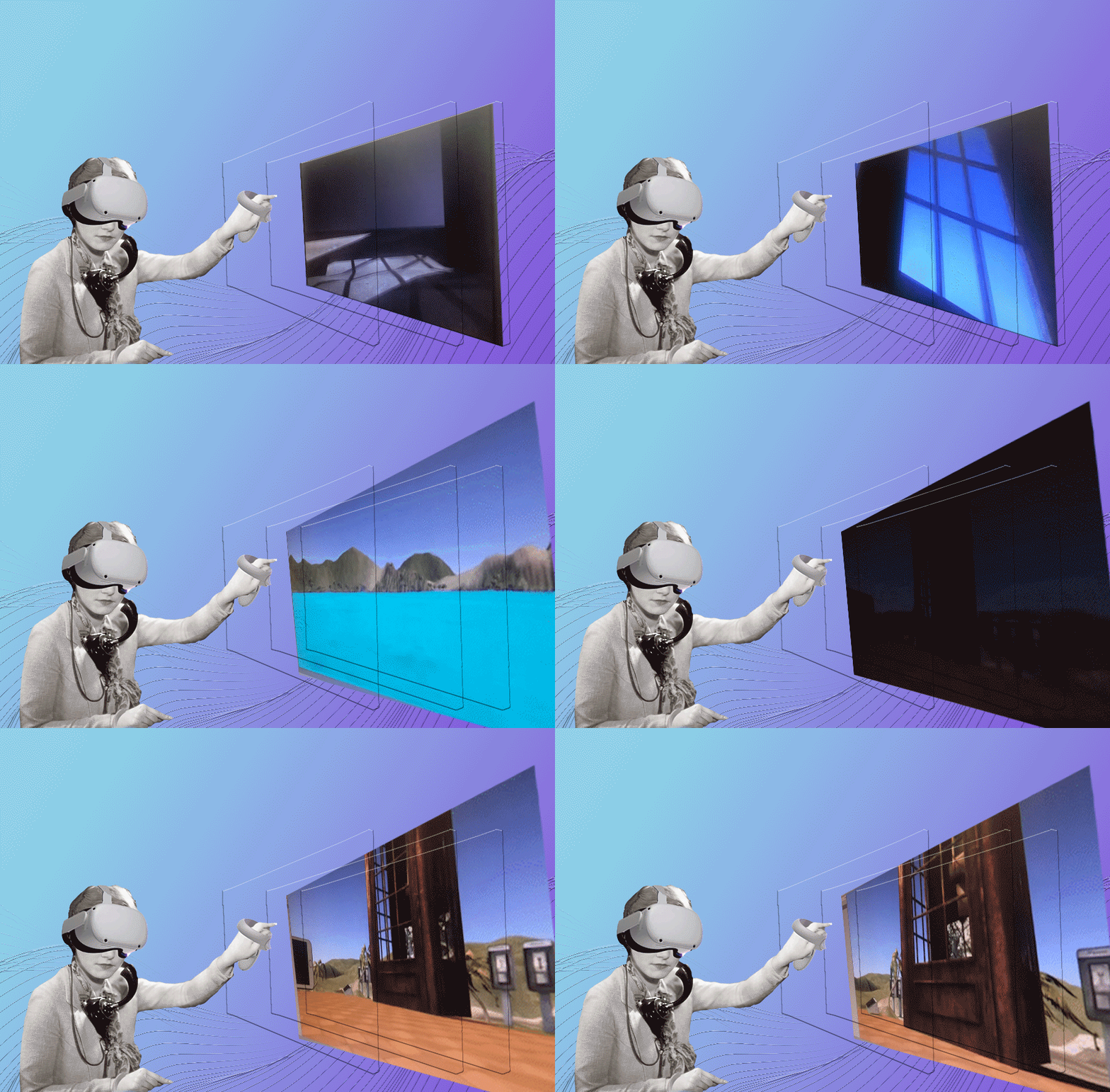
Feminanimate Objects
UX Designer, Researcher, VR Designer, Video Editor, Script Writer, Audio Producer
Role
3 weeks, May 2019
Duration
Unity, Google Play, Premiere Pro, Ableton Logic
Tools
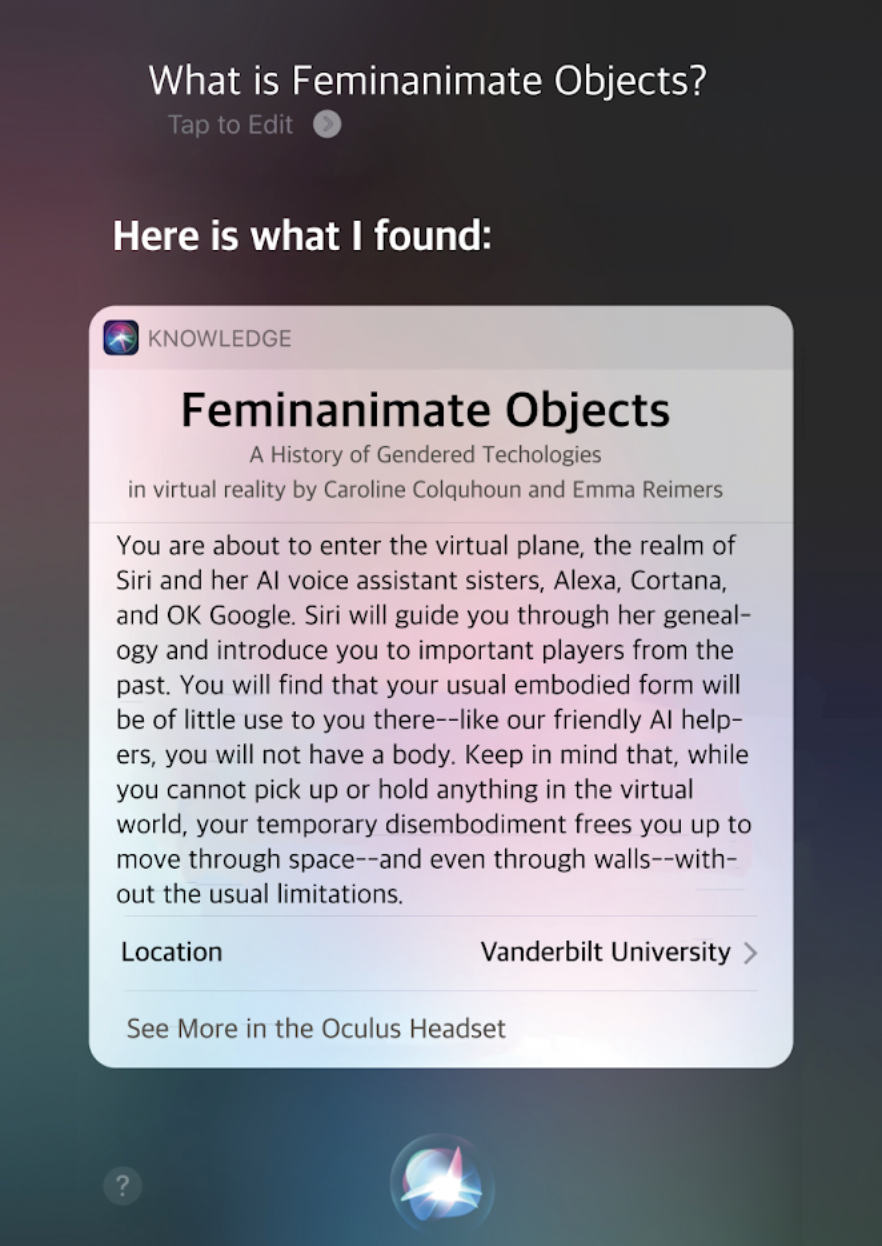
This virtual reality experience invites a consideration of the historiography and implications of female-personified technological infrastructures, both voiced and voiceless. In exploring gender in technology from nautical tradition to smartphone-embedded virtual assistants, my artistic collaborator Caroline Colquhoun and I investigated the ways in which the feminine is often seen and not heard or, conversely, heard and not seen. By challenging the often overlooked gender bias programmed into our technologies, Feminanimate Objects asks that viewers reprogram themselves.
Context
Problem
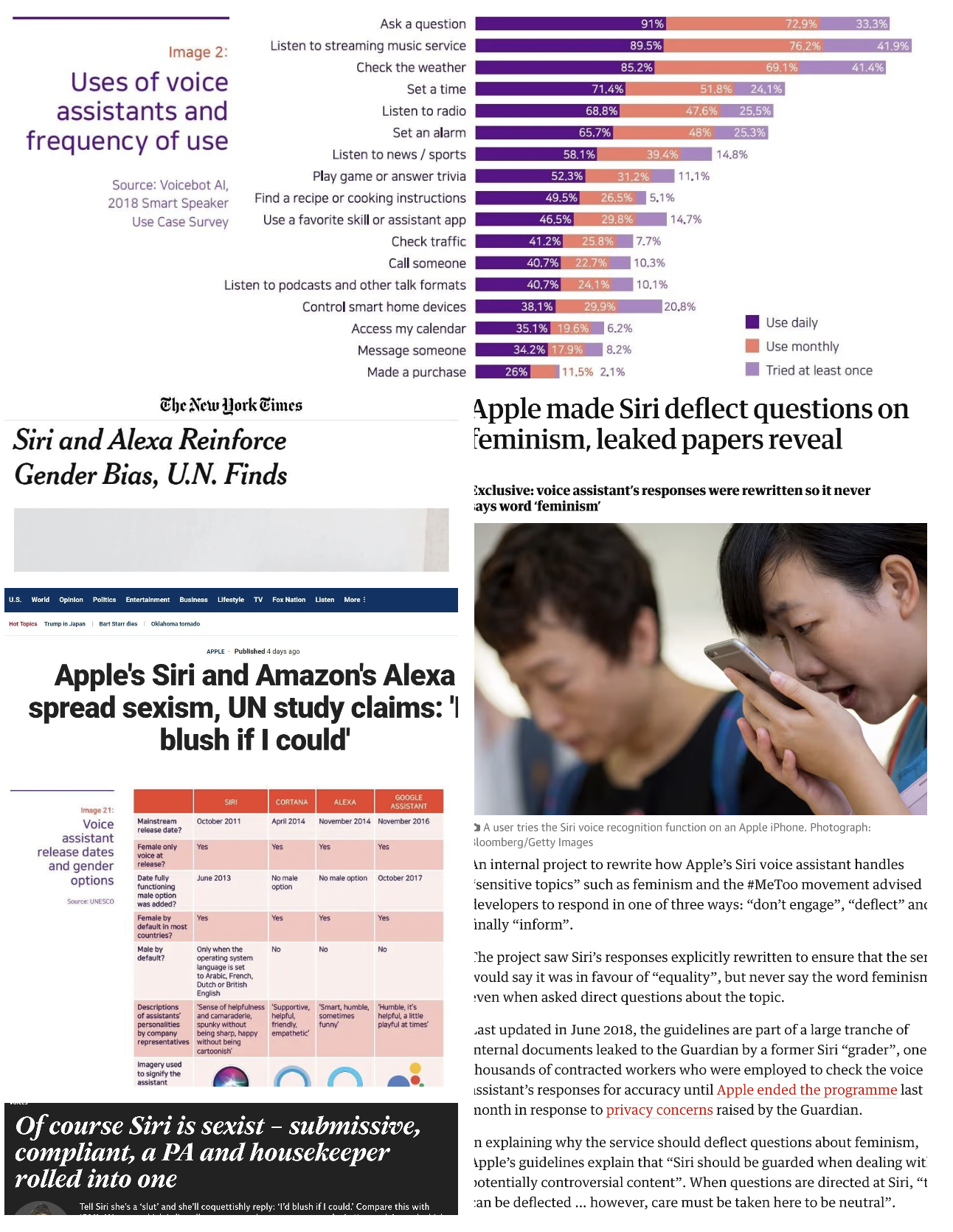
Virtual assistants like Siri, Alexa, and others have been programmed to be female or feminized helpers. Having a woman on demand in your pocket via a smartphone is a problematic complication of gender relations and reinforces antifeminist histories of media related to computer and the phone, remediating those into new nightmarish possibilities in the digital age.
How might we create an immersive media experience that puts the user in relationship with the past, present, and impending future voices of women and other feminized and disembodied beings?
Team

Dr. Caroline Colquhoun
Vanderbilt University
Caroline’s work focuses on modern resistance in Hispaniphone Africa through media arts. She pays close attention to migration, historical memory, gender, and transcultural Identities.
Dr. Emma Vendetta
Vanderbilt University
Emma’s research centers adult learners’ interactions with sound and mixed media in order to increase empathy. I work on topics related to race, gender, equity, literacy, and place-making.
Process

Solidify theoretical approach.
Borrowing from and expanding upon Chun's restructuring and Flaig's call to action, Feminanimate Objects seeks to explore the analytical and historical potential in examining gender and/as technology; looking at the entanglements and overlaps of the mediating system of gender with other mediating elements reveals gender to be “not simply an object of representation and portrayal, of knowledge or truth, but also a technique that one uses, even as one is used by it — a carefully crafted, historically inflected system of tools, mediation, or enframing that builds history and identity” (Chun 7). We then connected to other empirical research.
Build 1st AR iteration in Google Play.
Employing a theoretical and practical framework informed by Flaig and Chun, we drafted a 360 Google Poly tour. (This tour is now defunct as Google discontinued their Poly 360 platform in early 2021). We played around with the idea of having a series of Google Cardboard headsets at a museum space so that guests could take the experience with them. This companion to the final edition of Feminanimate Objects allowed us to ask questions about the gap between AR media and VR media. We felt the need for a more immersive experience, improved sophistication, and streamlined storytelling.
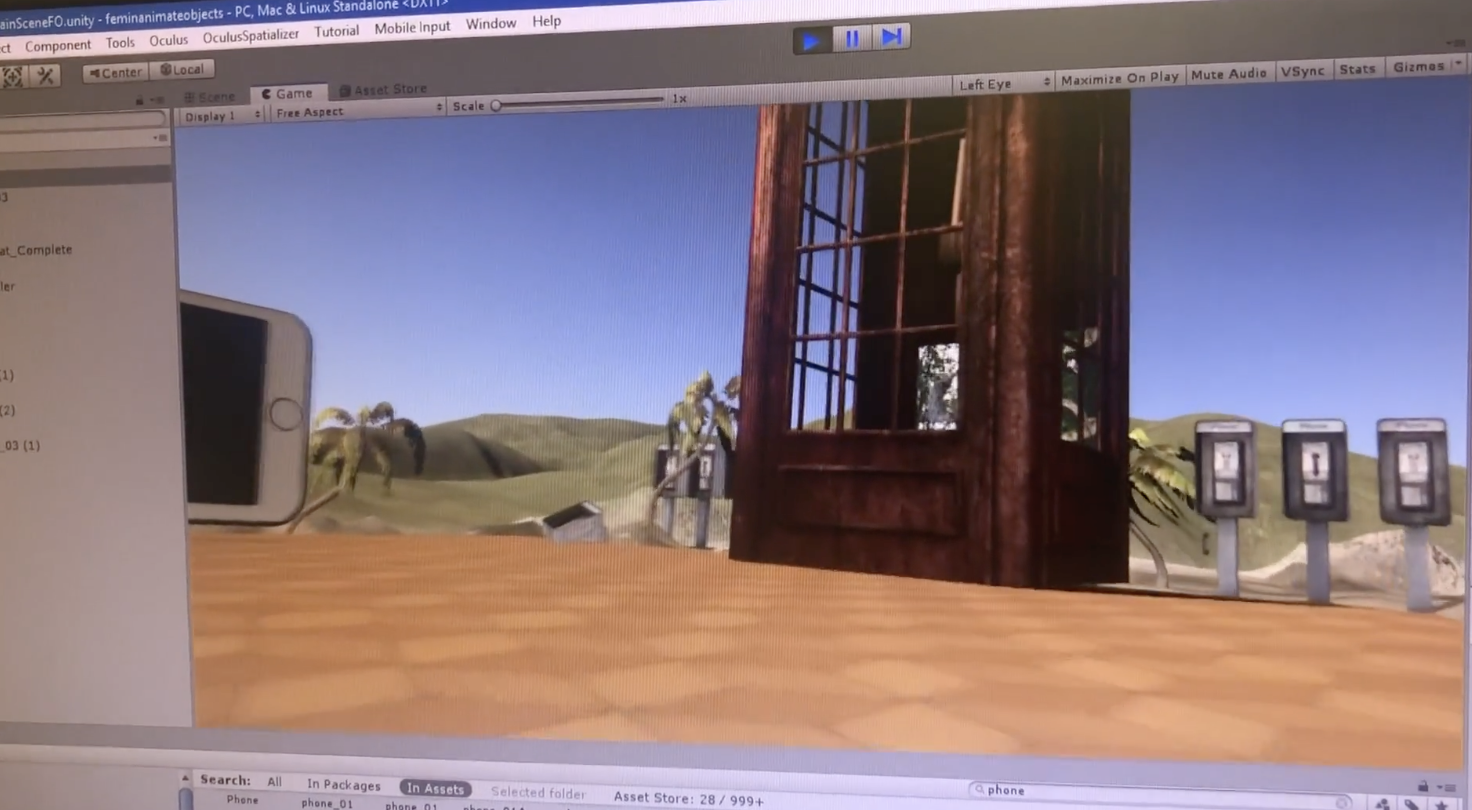
Build 2nd iteration in Unity, consulting a VR expert.
Tracing the (abridged) history of Alexa and Siri’s ancestors, we examine the feminization of technological infrastructures and the objectification of the feminine and its implications in past, present, and future. In building our VR experience, we experienced many technical limitations, time constraints, and lots of bugs that needed to go or, in one case, evolved to become a feature.
We consulted with Dr. Ole Molvig, a VR expert and instructor, at Vanderbilt’s Wond’ry Lab as we troubleshooted.
Key updates to our previous iteration:
adaptation of circular narrative into 15-min timed experience
creation of videos to project within virtual space
development of virtual landscape
writing and recording of Siri scripts
coding (lighting, timed cues, interactivity) within Unity
Product
Try it out.
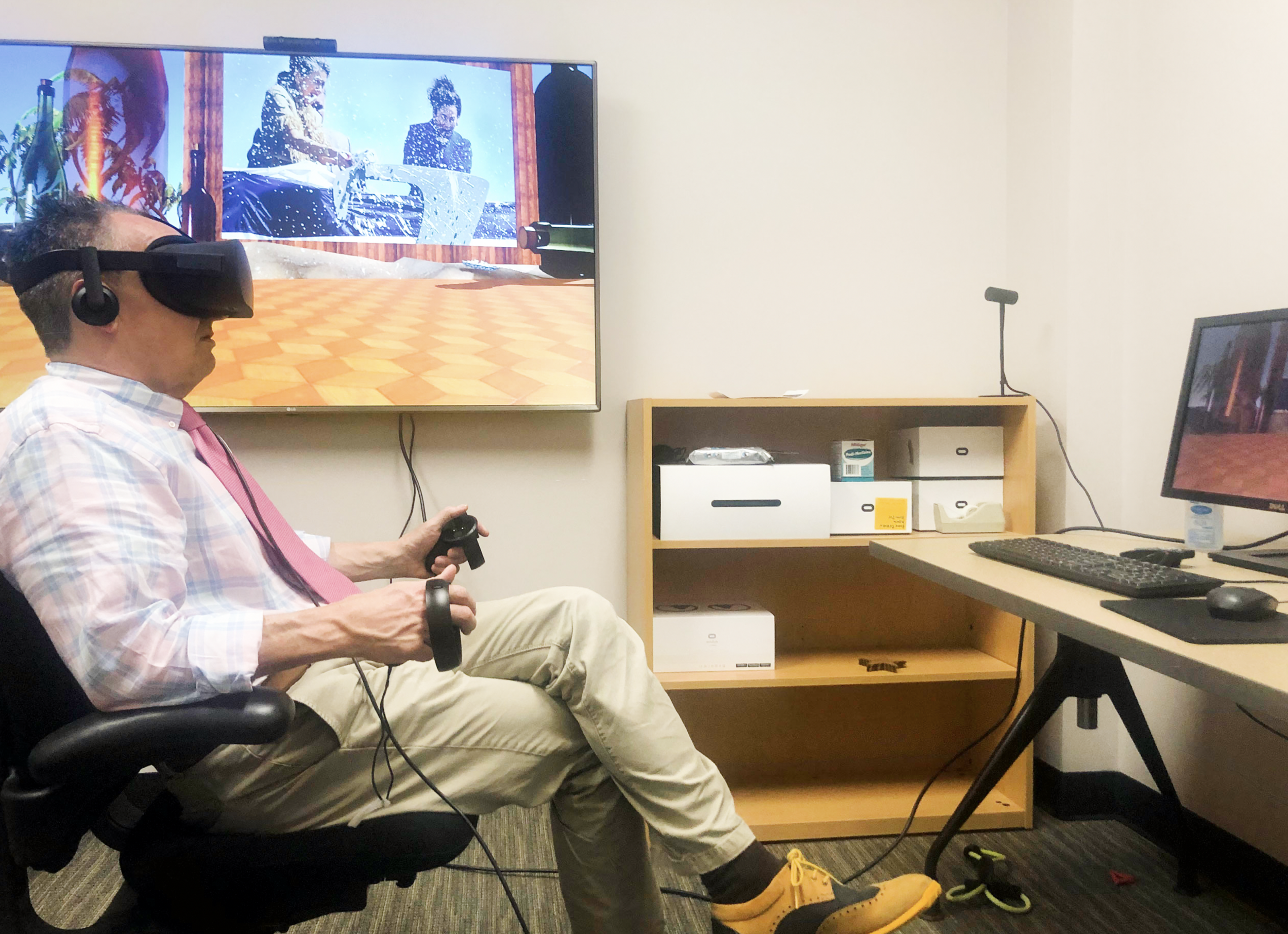
Feminanimate Objects lives in the VR lab at the Digital Humanities Center at Vanderbilt University in Nashville, TN, USA. This 1 minute trailer orients participants to the project
Results
68% of users described the experience as uncanny in some way.
Of the 32 users who gave feedback on the project, a majority remarked on :
feeling “disembodied in the virtual space” (having no visible hands or feet)
feeling “sensitive to [one’s] body” in the physical plane
questioning the line between human and computer
considering “agency” and “who’s in charge”
being uncomfortable with hearing Siri’s voice without user prompting (11 participants)
For us, this experience for users marked success on the goals we set: we were able to link the form of mediation (VR) with the content of the mediation (a history told by disembodied women helpers) in a way that drove the narrative home for users.
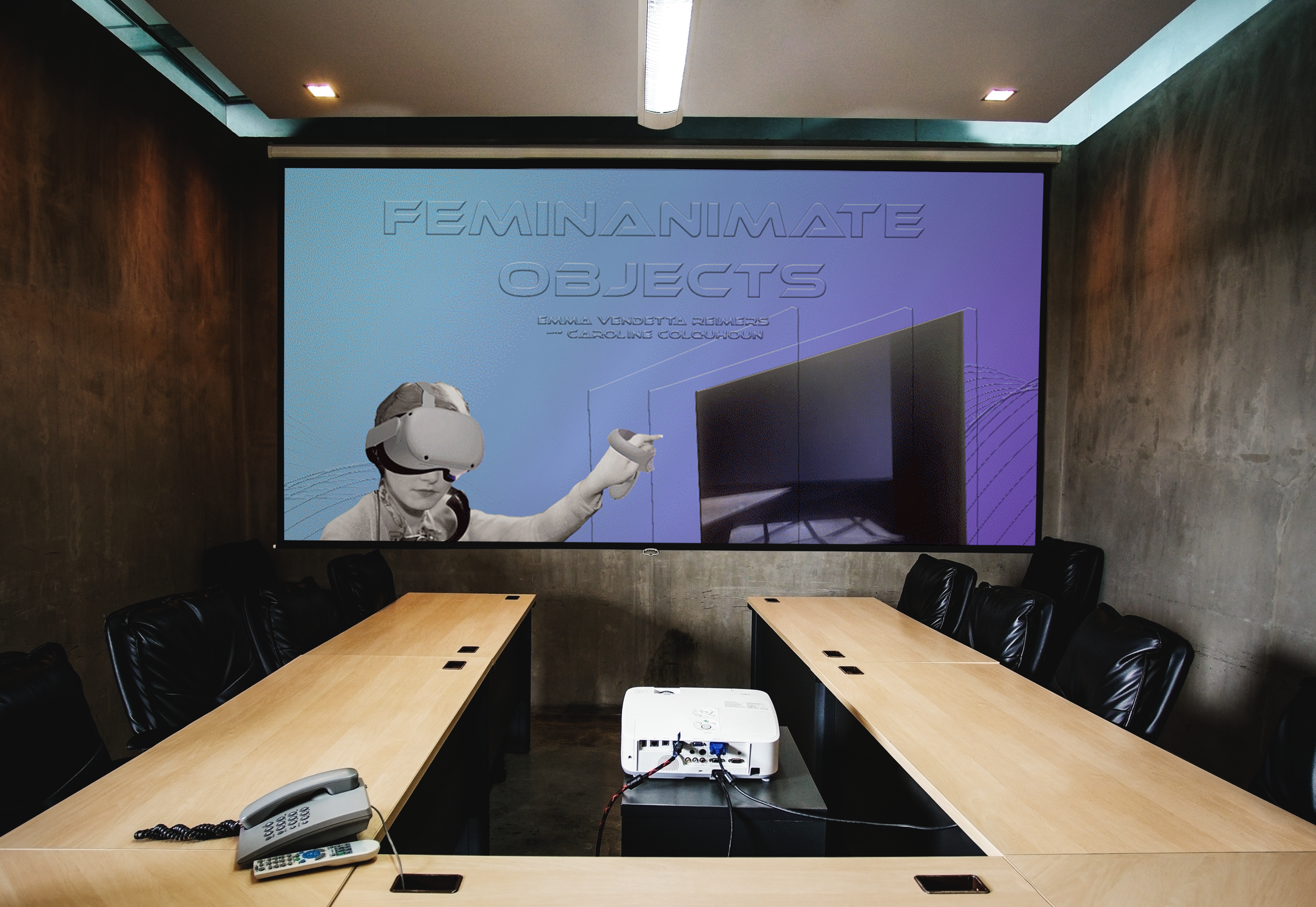
57% of instructors who visited plan to use Feminanimate Objects in their classrooms.
4 of the 7 instructors who visited our public showing of the VR project requested that Caroline and I bring it to their classrooms for students to experience.
For us, this indicated the impact and directness of our project. It rang true with stakeholders who spend ample time considering these same research questions and issues, then educating a top university about these same topics.